One-Page vs. Two-Page Resume: How to Choose the Perfect Length
One-Page vs. Two-Page Resume: How to Choose the Perfect Length
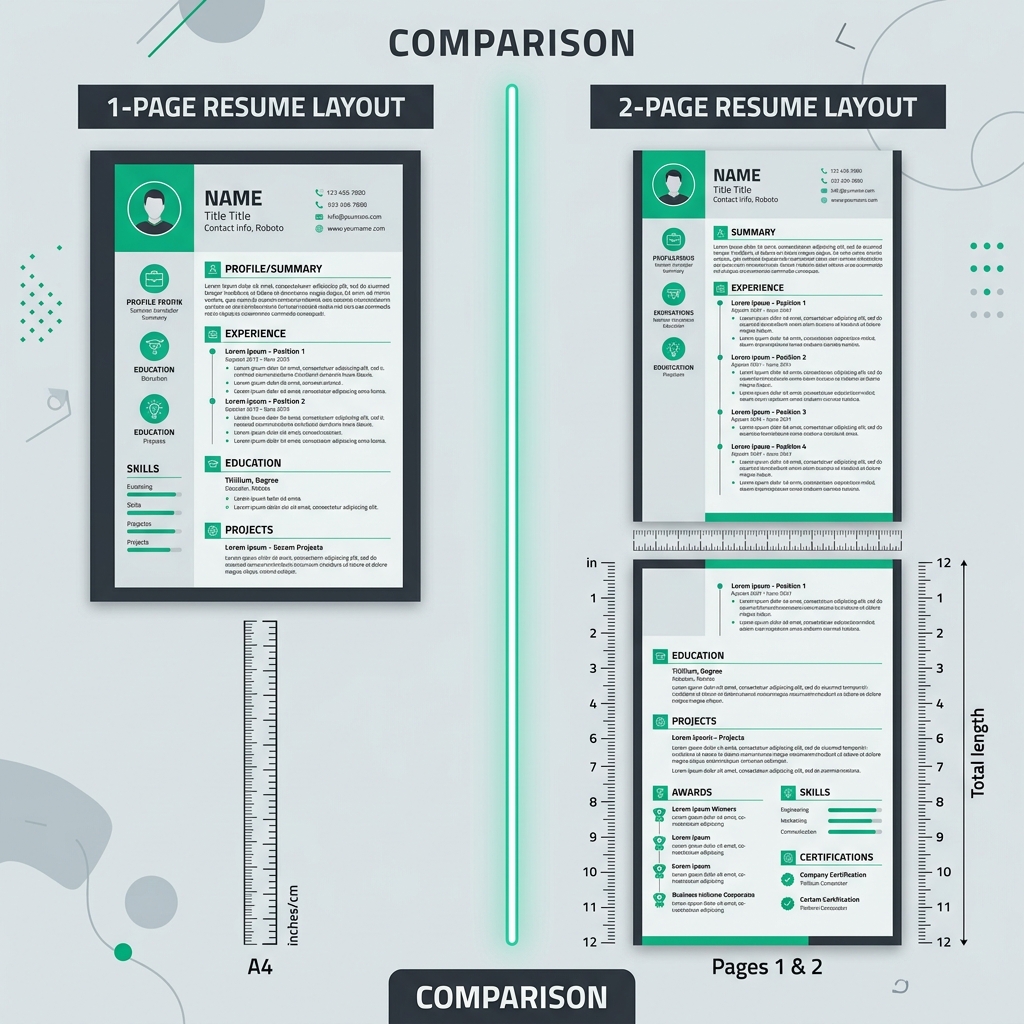
One of the oldest debates in job applications is resume length. You may have heard that a resume *must* fit on a single page, or that two pages are necessary to show detail.
The truth in 2026 is that resume length depends entirely on your experience level and industry. A fresher with a two-page resume looks unfocused, while an executive with a one-page resume looks underqualified.
Here is how to choose the right length for your career level.
1. When to Use a One-Page Resume
A single-page resume is the gold standard for:
- Freshers & Students: If you have under 2 years of experience, all your content should easily fit on one page.
- Career Switchers: Keeping your document to one page forces you to focus only on relevant transferable skills.
- Technical Specialists: If you write clean bullet points with strong keywords, one page is often enough to land a developer or design interview.
[TIP]
To fit your resume on one page, keep bullet points punchy (max 2 lines each), merge your contact details onto a single line, and use standard margin spacing (0.75").
2. When to Use a Two-Page Resume
A two-page resume is appropriate and expected for:
- Professionals with 5+ years of experience: You need the space to explain achievements across multiple companies.
- Managers & Team Leaders: Showing leadership metrics, budget details, and cross-functional coordination requires extra real estate.
- Academics, Researchers & Consultants: These roles require listings of publications, project audits, or client portfolios.
3. The Unbreakable Rules of Page Budget
If you choose a two-page layout, make sure you follow these rules:
1. Do not write a page and a half: If your content spills over onto page 2 by just 3 or 4 lines, it looks sloppy. Edit it down to fit on a single page, or fill at least 70% of the second page.
2. Keep the most important info on Page 1: Recruiters spend 6 seconds scanning. If your primary skills and achievements aren't above the fold on the first page, they will never see page two.
Create & Build Your ATS Resume in 3 Min
Skip confusing formatting and avoid expensive paywall traps. Select a vetted free resume template, enhance your bullets with AI, and download your clean PDF right now.
Written by Aarav Sharma
Professional career counselor and technical writer at ResumeLelo. Passionate about empowering candidates to build ATS-optimized resumes and pass hiring software.