Mastering Resume SEO: How to Pass the ATS in 2026
Mastering Resume SEO: How to Pass the ATS in 2026
If you’ve been applying for jobs online and receiving nothing but automated rejection emails or radio silence, you are likely hitting a digital wall: the Applicant Tracking System (ATS).
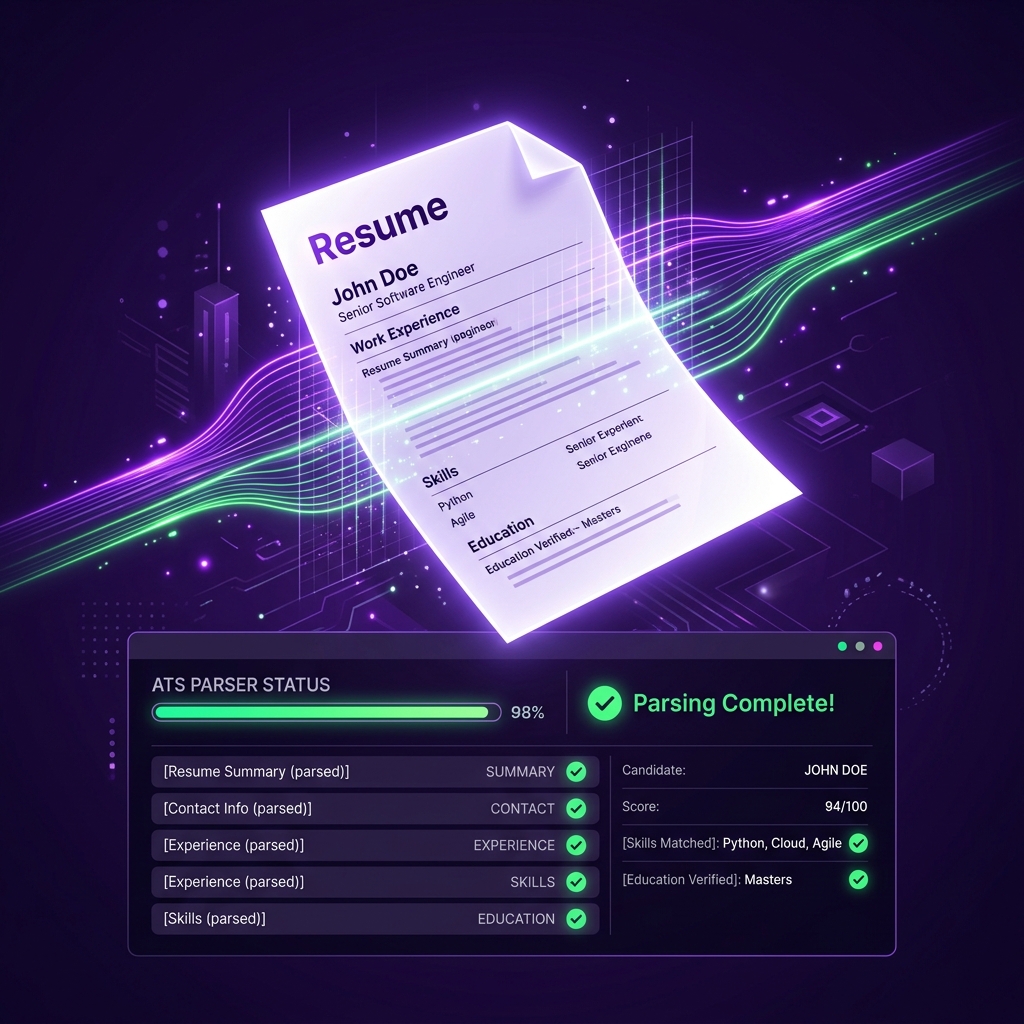
In 2026, over 98% of Fortune 500 companies and a growing number of mid-sized businesses use ATS software to filter, rank, and organize candidates before a human recruiter ever sees a resume. To get noticed, your resume must be treated as a search-optimized document—a process we call Resume SEO.
Here is the exact blueprint to optimize your resume, beat the bots, and land more interviews.
1. What is Resume SEO?
Just like Google ranks websites based on relevance and keywords, an ATS ranks resumes based on how closely they match the job description. Resume SEO is the art of aligning your resume's structure, skills, and terminology with what the recruiter is searching for.
Modern ATS platforms don't just count keywords anymore; they use semantic search and Natural Language Processing (NLP). They understand context, synonyms, and relationships between skills. For example, if a job description seeks expertise in "Cloud Systems," the ATS understands that "AWS," "Azure," and "GCP" are relevant, even if the exact phrase "Cloud Systems" isn't repeated ten times.
2. The 1-2-3 Keyword Distribution Rule
Keyword stuffing—listing a massive block of skills in tiny, invisible font at the bottom of your page—is a surefire way to get rejected. Modern systems flag this as spam. Instead, you need a natural, strategic distribution of keywords.
We recommend the 1-2-3 Distribution Rule:
- 1 Time in your Summary: Place your primary target keyword (e.g., "Full-Stack Engineer" or "Content Strategist") in your professional summary at the very top.
- 2 to 3 Times in your Experience: Integrate key skills directly into your bullet points. Don't just list "Project Management"—write about how you *utilized project management methodologies to deliver a CRM update*.
- Skills Section: Group your secondary keywords under clean categories (e.g., *Languages, Frameworks, Developer Tools*) at the bottom or side of your page.
3. Formatting Rules: Keep It Parser-Safe
The most common reason high-quality candidates get rejected is that the ATS parser cannot read their formatting. If the machine reads your resume as a blank page or a jumble of corrupted characters, you're out.
Follow these strict formatting guidelines:
Use a Single-Column Layout
Multi-column templates look stylish to the human eye, but many ATS parsers read from left to right across the entire page, blending column text together. A single-column layout ensures the parser reads your content in the correct chronological order.
Ditch Complex Elements
Avoid placing critical information inside:
- Headers or Footers (some parsers ignore these sections entirely).
- Tables, text boxes, or graphics (which often freeze the parser).
- Icons, progress bars, or skill circles (which render as illegible symbols).
Export as a Clean PDF
While Microsoft Word (.docx) is highly compatible, a standard, text-based PDF is the safest option in 2026. Make sure your PDF is text-searchable. You can verify this by trying to highlight and copy the text. If you can’t copy it, the ATS can’t read it either.
4. Actionable Checklist for Your Next Application
Before hitting "Submit" on your next job application, take 10 minutes to run through this checklist:
1. Match the exact naming: If the job description lists "HTML5 & CSS3," change your "Web Development" skill bullet to match that exact phrasing.
2. Verify standard section headers: Use simple headings like "Work Experience," "Skills," and "Education." Do not use creative titles like "Where I've Been" or "My Superpowers."
3. Use chronological format: List your roles starting with the most recent. The parser relies on date formats to calculate your years of experience.
4. Incorporate metrics: Ensure your keywords are backed by numbers (e.g., "boosted user retention by 22%" or "managed a budget of ₹5,00,000"). This proves your proficiency to both the machine and the recruiter.
By optimizing your resume using these SEO principles, you ensure your application stands out in search results and makes it directly to the recruiter's desk.
Create & Build Your ATS Resume in 3 Min
Skip confusing formatting and avoid expensive paywall traps. Select a vetted free resume template, enhance your bullets with AI, and download your clean PDF right now.
Written by Aarav Sharma
Professional career counselor and technical writer at ResumeLelo. Passionate about empowering candidates to build ATS-optimized resumes and pass hiring software.